A storm rolls through, a limb punches a hole in the shingles, and suddenly you need a tarp on the roof before the next rain. Most Utah homeowners have been there at least once. The first question is almost always the same: what is this going to cost? Honest answer: it depends, and not in a vague way. There are specific factors that push the job up or keep it lean. Here is how Renovation Vineyard sees them after tarping roofs across the state.
The size and location of the damage
A cracked vent boot on a single-story ranch is a different job than a section of torn decking on a two-story home with a steep pitch. Tarping covers the exposed area plus a margin, so a bigger hole means more material, more time, and more fasteners into the surrounding roof.
Location on the roof matters too. Damage near the ridge is usually easier to reach than damage tucked against a valley or behind a chimney. Roofers have to work around those obstacles, and that adds minutes that add up.
If you can, note where the damage sits before anyone arrives. Snap a photo from the ground. It helps the roofer plan the job and helps you understand why the work looks the way it does.
Roof pitch, height, and access
Steep roofs are slower and riskier to work on. A roofer moving carefully on a 10 in 12 pitch needs more setup, more safety gear, and more time than someone on a low-slope roof. Height adds the same kind of complexity. A three-story home in Salt Lake or a hillside house in Ogden with limited yard space will often take longer to stage than a flat-yard home in a rural town.
Access is the quiet cost driver. Narrow driveways, fences, overhead power lines, and tight side yards all slow the crew down. Anything that blocks a ladder or a materials drop adds labor.
- Clear a path to the side or back of the house if you can.
- Move vehicles and patio furniture away from the foundation.
- Tell the office about gates, dogs, or locked access points when you call.
Materials and how the tarp is secured
Not every tarp is the same. Heavier woven tarps cost more than lightweight polyethylene, and they last longer under wind. Utah weather is hard on a temporary cover. Canyon gusts, sudden hail, and dry heat that makes plastic brittle all shape which material makes sense.
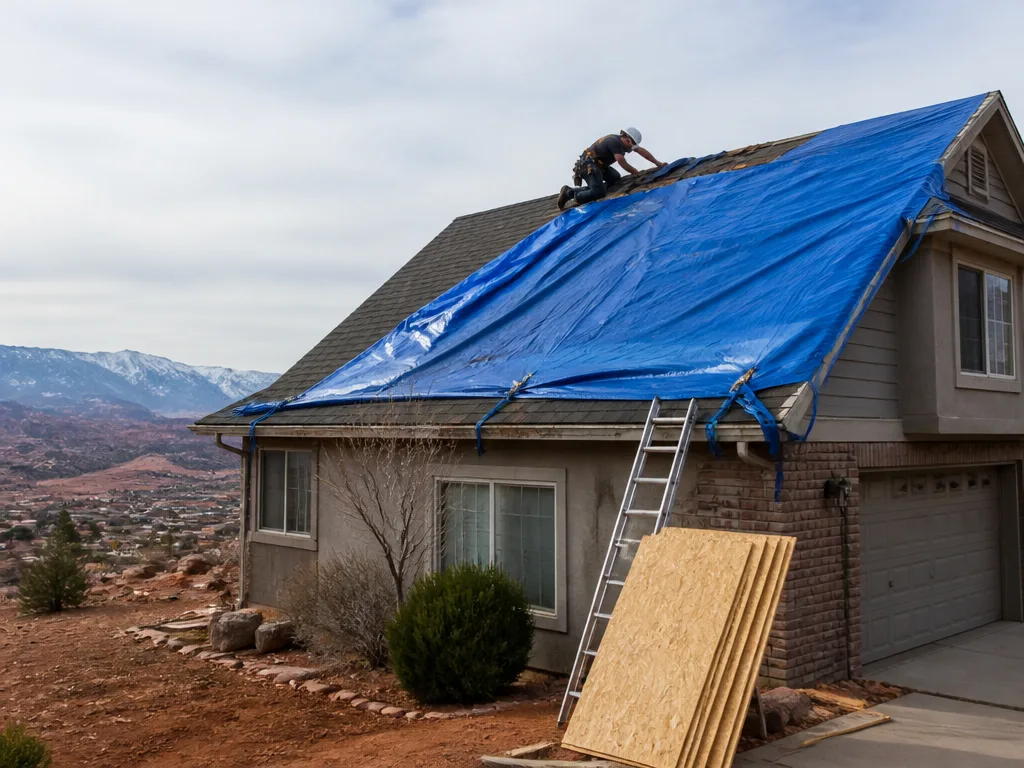
Securing the tarp is where a lot of the labor goes. Some jobs need 2x4 battens screwed through the roof deck along the edges. Others can use sandbags or ballast in certain situations, though that is less common on pitched roofs. More fasteners and more battens mean more time and more material.
Questions to ask about the setup
Ask what kind of tarp is going on and how it is anchored. A good roofer will explain the plan without you having to drag it out of them. If the explanation sounds vague, keep asking until it makes sense.
Timing, weather, and how quickly the job is needed
When the call comes matters. A daytime job during a calm week in Provo is simpler than a night job in the middle of a windstorm. Roofers working after dark or in wind, rain, or lightning take more care, and that care shows up in the scheduling and the labor hours.
Multiple storms can also stack up. After a big hail event, many homeowners in the same region call at once. Crews get stretched, and the logistics of moving between properties take longer. That is not a reason to panic, but it does mean the first available slot may not be the same hour you called.
Weather also affects the work itself. Wet decking is slippery and harder to fasten into. If the storm is still active, the roofer may need to wait for a window before getting up there safely.
Extent of the water intrusion and interior protection
A tarp keeps water out of the roof. It does not fix water that already got inside. If the leak has soaked insulation or ceiling drywall, the job may need extra steps like moving furniture, placing buckets, or protecting floors. Those steps are part of the tarping visit, and they change the total labor.
Some homeowners want the crew to stop at the tarp. Others want the immediate interior mess handled too. Be clear about what you want done on the same visit so nobody is surprised by the scope.
What you can do to keep the job manageable
Most of the cost factors above are outside your control, but a few things are in your hands. Take photos from the ground and from inside the affected room. Move valuables and clear floors under the leak. Shut off ceiling fans so they do not spin into water. Keep kids and pets away from the work zone.
Once the tarp is on, schedule permanent repairs soon. A temporary cover is not meant to last through a whole season. Ask the roofer how long the tarp is expected to hold in your area so you can plan the next step, whether that means a shingle patch or a fuller replacement.
Whatever you are dealing with, from a single torn shingle line to a section of roof opened up by a fallen tree, Renovation Vineyard has crews working across Utah. Give us a call and we will walk you through what the job needs, wherever you are in Utah.