Ask five people in Utah how gutters should be installed and you will probably get five different answers. Most of them sound confident. A few are right, and several have been repeated so long they feel like common sense. Renovation Vineyard works on gutter systems across the state, from older homes with hand-formed downspouts to newer builds with long roof planes, and we hear the same myths over and over. Here are the ones worth dropping, and what is actually true.
Myth: Bigger gutters always mean better drainage
Bigger sounds like it should carry more water, and in a lot of cases it does. But a six-inch gutter sitting on a fascia that was never built to hold it does not help much. The limiting factor is usually the downspout. A wide trough feeding into a two-by-three downspout will choke during a hard summer storm, and water will spill right over the front edge anyway.
What matters more is matching the gutter size to the roof area it drains and placing downspouts where the water actually concentrates. Valleys and long slopes need more outlets than you think. When our roofers measure a home, they look at the roof square footage first and then figure out where the water will run, not just which gutter looks the sturdiest at the hardware store.
Myth: Seamless gutters never leak
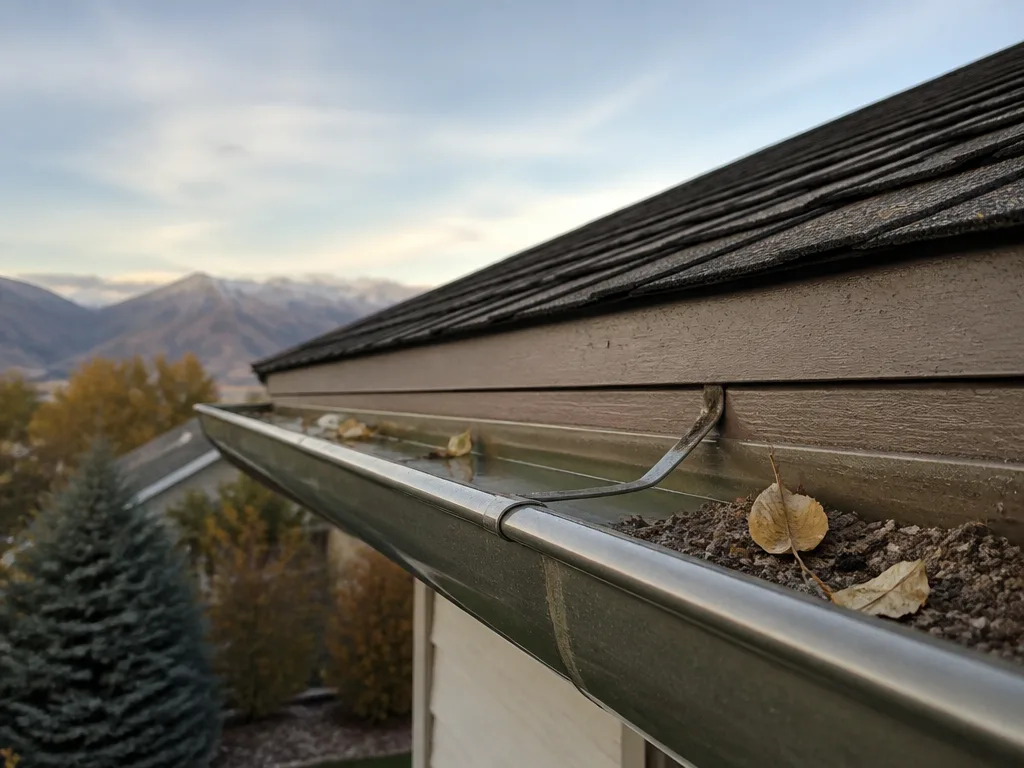
Seamless gutters have fewer joints, and that is a real advantage. Fewer seams means fewer places for sealant to fail. But seamless does not mean sealed forever. Corners, end caps, and the transition where the gutter meets a downspout are all places where leaks start, especially after a few freeze and thaw cycles that Utah winters bring.
Seamless is a good choice for most homes here. Just know that the joints still need attention, and an installer who skips the corner work or uses cheap sealant will give you a leak in two or three seasons. Ask to see how the corners are finished before you sign off on anything.
Myth: Gutters are just a cosmetic upgrade
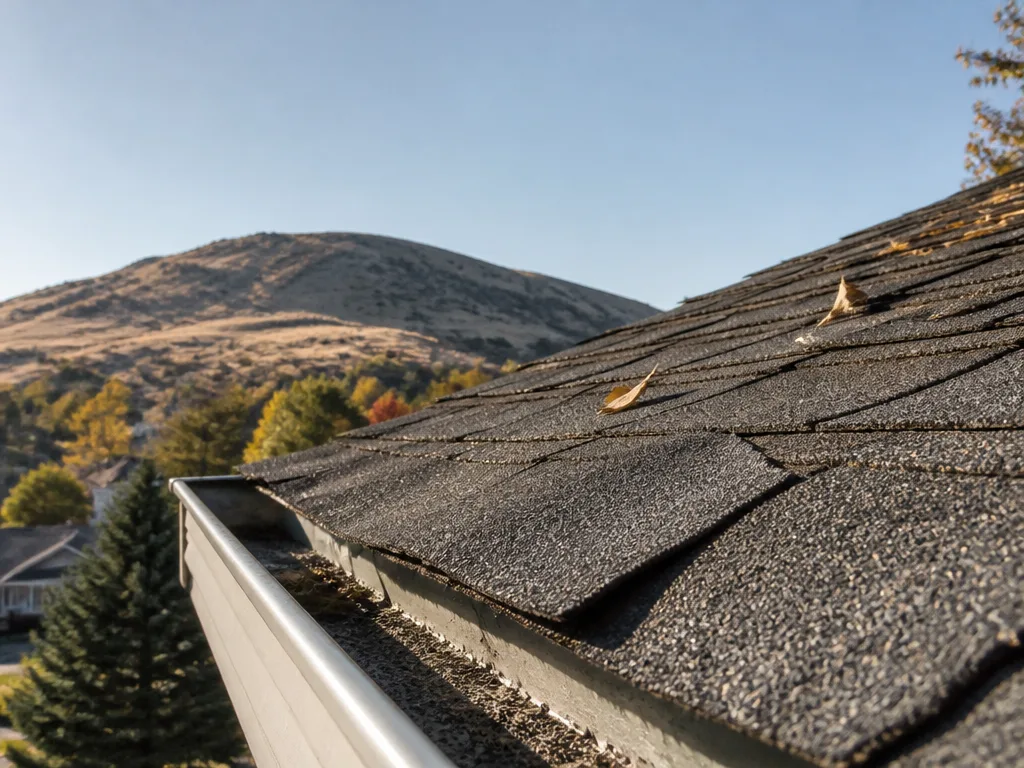
A lot of folks think of gutters as trim. They are not. Gutters move water away from the foundation, the fascia boards, and the soffit. When they overflow or sag, that water runs down the siding, soaks into the ground next to the footing, and eventually finds its way into the crawlspace or basement.
In Utah, where soil can swell and shrink with moisture changes, poor drainage near a foundation causes real trouble. We see fascia rot on older homes in every corner of the state, and most of it traces back to a gutter that was pitched wrong or hung too loose to handle a heavy snow melt.
Myth: Any gutter will do if the roof is new
A new roof and a new gutter system are two different jobs, but they work together. A fresh shingle layer sheds water quickly, which means more water arrives at the gutter line in a shorter window. If the old gutters were already undersized or sagging, a new roof can make the problem worse, not better.
When you are replacing the roof, it makes sense to look at the gutters at the same time. Check the slope (most runs need about a quarter inch of fall for every ten feet), inspect the hangers, and make sure the drip edge is tied in correctly so water has a clean path into the trough.
Myth: DIY gutters save a lot of money
Gutter kits look easy, and for a short straight run on a single-story ranch, a careful homeowner can manage it. The trouble starts when the job involves long slopes, multiple valleys, or a two-story pitch. Ladder work near power lines, improperly spaced hangers, and a slight error in pitch can cost you more to fix than the original install would have cost.
Here is a simple way to think about it. If your roof has more than one direction of water flow, or you need to work above the second story, call a roofer. If you are comfortable with a level, a chalk line, and a helper, a single straight run might be fine. Either way, know the limits before you start.
What to check before the work starts
- Confirm the gutter size matches the roof area and downspout count.
- Look at how the seams, corners, and end caps are finished.
- Ask how the hangers are spaced, especially on heavy snow-load sections.
- Check that the fall runs toward the downspouts with a steady slope.
- Make sure the discharge points send water well away from the foundation.
If you are not sure where your home stands, give Renovation Vineyard a call. We help homeowners across Utah sort out what their gutters really need, whether that is a repair, a full replacement, or just a plan for the next few years. The phone is the quickest way to reach our team, and we will talk through your roof with you directly.